What the dry keeps
Desert discoveries
Dry places keep things. Bones do not rot, rocks do not get buried, and a strange stone stands out for miles.
Whales in the desert
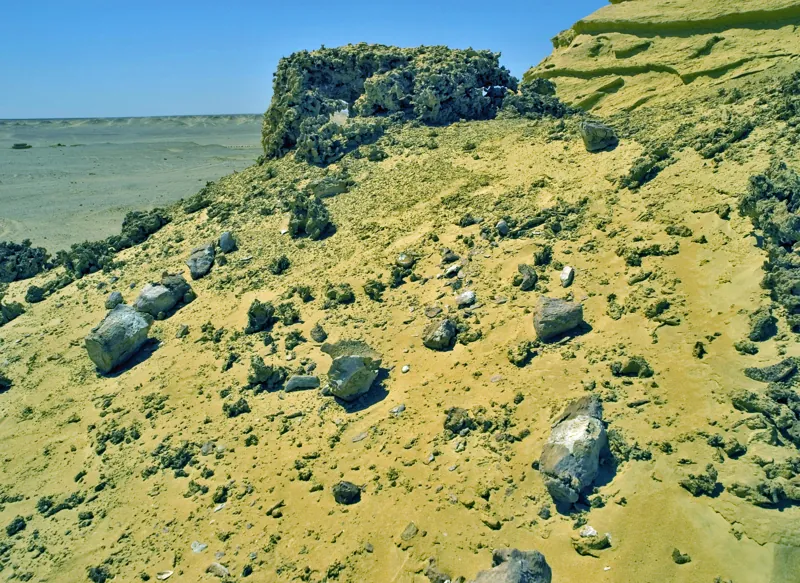
Wadi Al-Hitan, Whale Valley, in Egypt’s Western Desert, holds fossils of the youngest archaeocetes, early whales in the last stages of losing their hind limbs. UNESCO calls it the most important site in the world for showing this stage of evolution, and says the number, concentration and quality of the fossils is unique.1
Glass from the sky, worn by a pharaoh
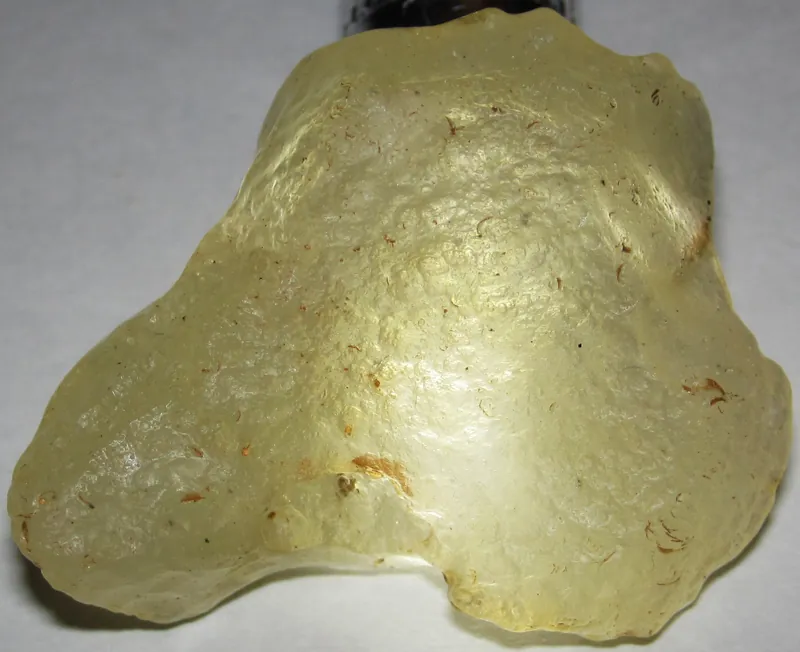
Libyan Desert Glass is found over several thousand square kilometres of western Egypt and formed 29 million years ago. For years people argued over whether it was made by a meteorite hitting the ground or by an airburst above it. In 2019 Curtin University researchers found that tiny zircon grains in the glass preserve evidence of reidite, a high-pressure mineral that forms only in a meteorite impact.2
The same canary-yellow glass sits in a pectoral ornament of King Tutankhamun, as the scarab at its centre.3
Meteorites on the ice
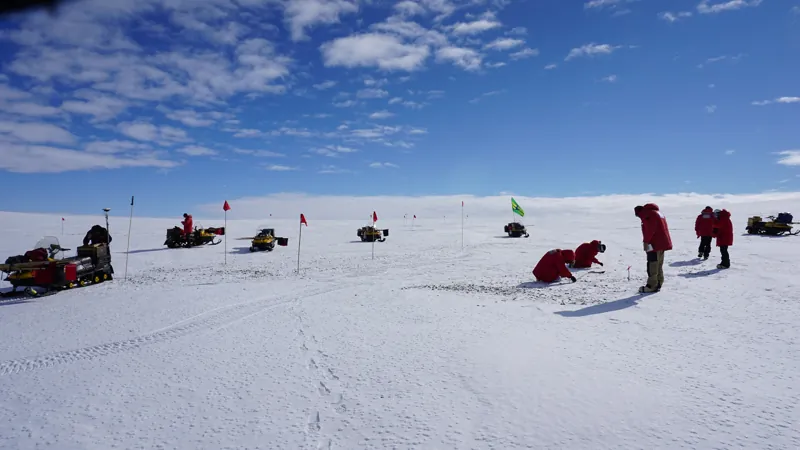
Antarctica is a desert of ice, and ANSMET, the US-led Antarctic Search for Meteorites, calls it the world’s premier meteorite hunting ground. On plain ice, any rock you find must have fallen from the sky. Better still, where the moving ice sheet is blocked by mountains, old ice is pushed up and stripped away by wind, leaving meteorites stranded on the surface.4
Since 1976 ANSMET has recovered more than 23,000 specimens, and some of them have proved to be pieces of the Moon and Mars, “delivered to us … free of charge”.4
Kept apart: Antarctica is a cold desert, so it appears on a deserts site. It is not part of the Sahara-style “hot desert” story, and the what is a desert? page explains the two definitions.