Slow, patient and strange
Desert plants
Desert plants either wait, store, or live very slowly. Some do all three, for a very long time.
Welwitschia: two leaves for life
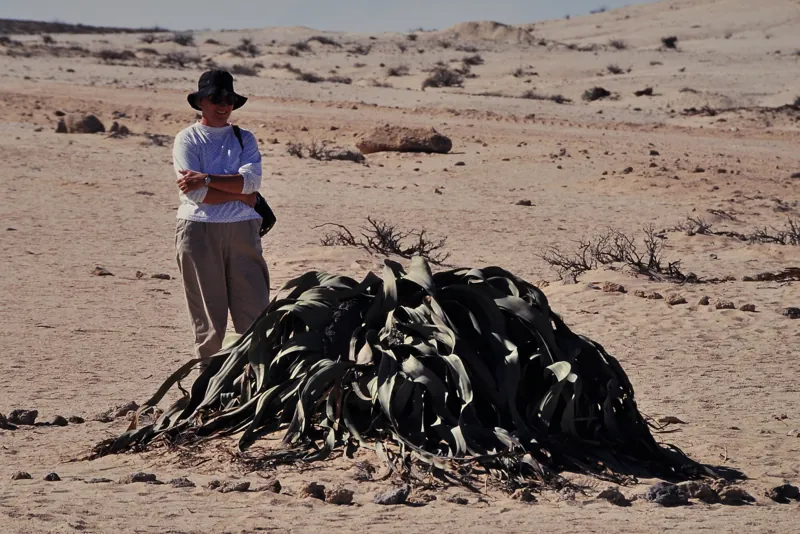
An adult welwitschia is two leaves, a stem base and roots, and nothing else. The two leaves are the original ones it grew as a seedling. They never stop growing and are never shed, so over the years they lie on the ground and tear into ribbons.1
The South African National Biodiversity Institute says carbon dating puts most welwitschias at 500 to 600 years old, and some of the larger ones at about 2,000. The largest recorded specimen, in Namibia’s Messum Mountains, is 1.8 metres high; another, on the Welwitschia Flats near the Swakop River, is 1.2 metres tall and 8.7 metres wide.1 Seedlings depend on fog to survive until the next rain.1
The saguaro: a 125-year adolescence
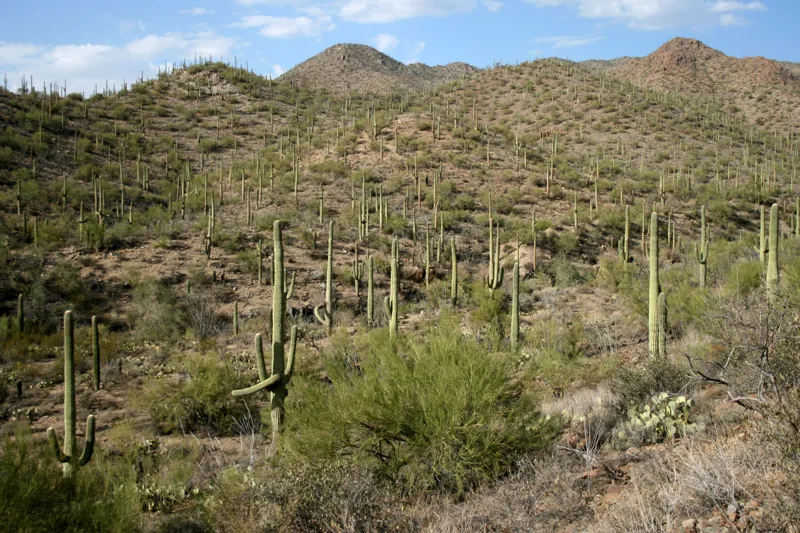
A saguaro grows only 2.5 to 4 centimetres (1 to 1.5 inches) in its first eight years. It first flowers at about 35. Arms usually start at 50 to 70 years, and where rain is scarcer it can take up to 100.2
An adult is considered to be about 125 years old, and may weigh 6 tons or more and stand 15 metres (50 feet) tall. The average lifespan is probably 150 to 175 years, and biologists believe some live over 200.2
Creosote bush: the smell of desert rain
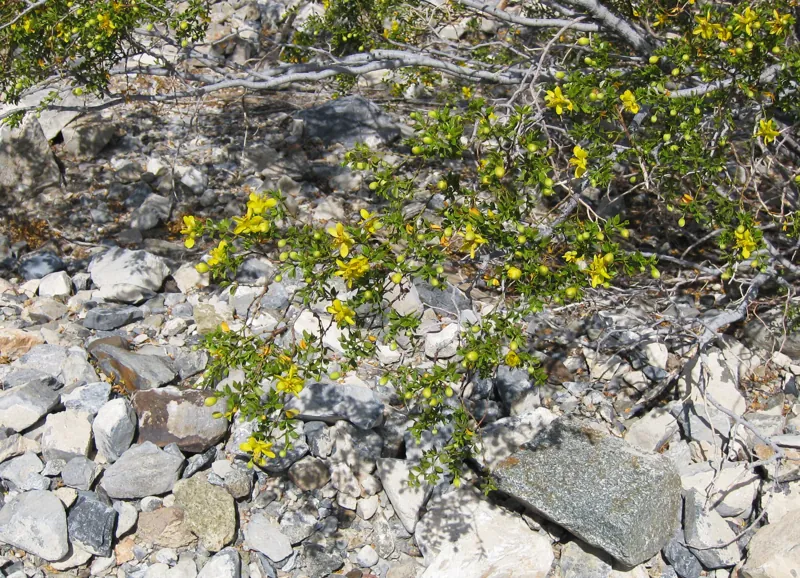
At Joshua Tree, the Park Service says a creosote bush just a foot tall may already be ten years old. It arrived in that part of California relatively recently, migrating north from the Sonoran Desert roughly 11,000 to 12,000 years ago, after the last Ice Age. When summer rain hits, it releases the rich, earthy smell many people think of as the smell of the desert after rain.3
Creosote can also clone itself. As the oldest parts of a clone die, younger parts live on in a ring, and California’s King Clone Ecological Reserve protects creosote clones that are thousands of years old and among the oldest living organisms on Earth.4
The Joshua tree has no rings
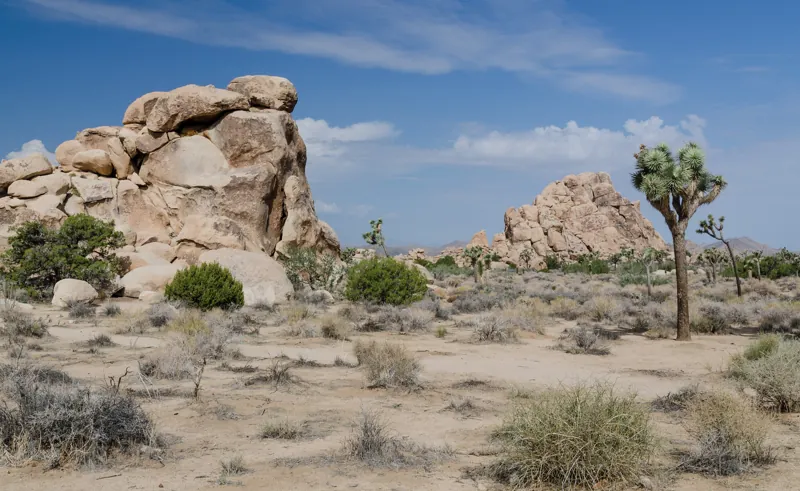
Joshua trees in the national park grow over 40 feet (12 metres) tall. Their average lifespan is thought to be about 150 years, though some may be far older; nobody can count, because Joshua trees do not form growth rings. Their pollination depends on a single partner, the yucca moth, which collects pollen while laying its eggs inside the flower.5
The driest desert, in flower
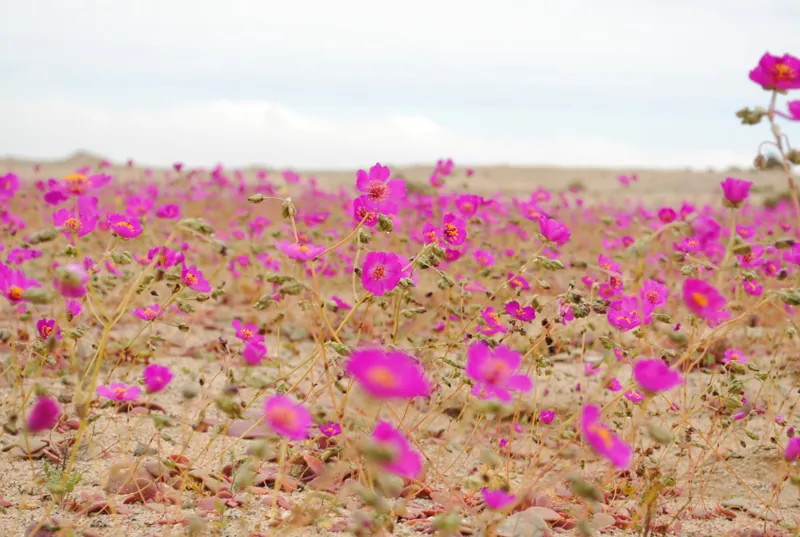
In 2026 unusually wet winter rains woke dormant seeds in northern Chile. NASA’s Landsat images show white blooms of Nolana (suspiros) in September and vast red-purple carpets of Cistanthe (pata de guanaco) by 24 October, near Desierto Florido National Park, southwest of Copiapó.6
A 2019 study had identified 13 Atacama blooms between 1981 and 2015. A plant geographer at the Pontificia Universidad Católica de Valparaíso told NASA the 2026 bloom appears to be the most significant to date in extent, intensity and duration, at least since remote sensing began.6 The photograph here is from the earlier bloom of 2010.