Records and arguments
Desert extremes
The hottest places on Earth are deserts. Which one is hottest depends on whether you measure the air or the ground, and on whether you trust a thermometer from 1922.
The hottest air: Death Valley
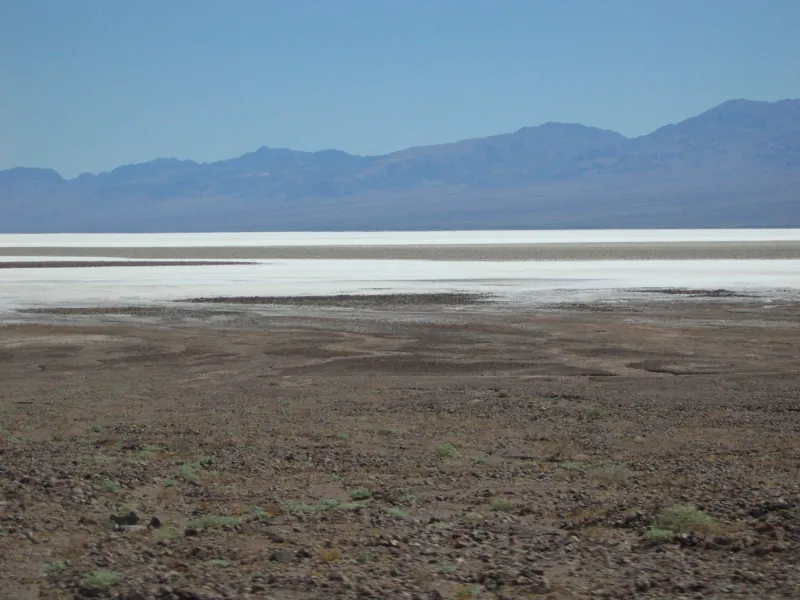
The world record for highest air temperature, 134°F (57°C, usually given as 56.7°C), was recorded at Furnace Creek in Death Valley on 10 July 1913. Summer temperatures there often top 120°F (49°C) in the shade, and overnight lows can stay in the 90s°F (mid-30s°C).1
Death Valley is also the driest place in North America: average rainfall is less than 2 inches (5 cm) a year, a fraction of what most deserts receive.1
The record that was thrown out
For 90 years the official record was 58°C, said to have been observed at an Italian military fort at El Azizia, Libya, on 13 September 1922.2 A World Meteorological Organization investigation in 2012 found an observer change at the station from 11 September 1922 and evidence that the type of thermometer apparently used, a Bellani-Six, was unreliable. Its conclusion was that the official highest recorded surface temperature is Death Valley’s 56.7°C of 10 July 1913.2
Air and ground are not the same: the Death Valley record is an air temperature, measured in the shade. The Lut Desert figure below is the temperature of the ground surface measured from space. Both are records; they measure different things.
The hottest ground: the Lut Desert
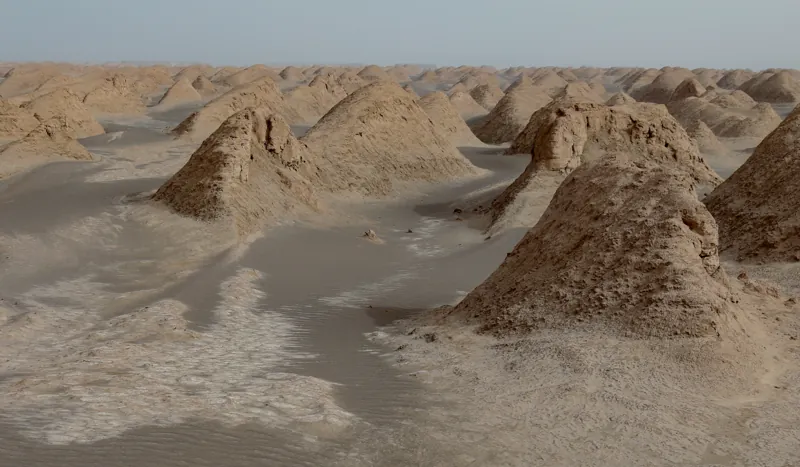
NASA-funded scientists searched MODIS satellite land-surface temperatures from 2003 to 2009 for the hottest spot on Earth. The single highest, in any year and any region, was in Iran’s Lut Desert in 2005: 70.7°C (159.3°F), more than 12°C warmer than the then-official air record from Libya.3
UNESCO describes the Lut as hyper-arid, sitting in a rain shadow in a basin ringed by mountains. Wind has carved it into kaluts, giant corrugated ridges that in places stand up to 155 metres high and run for more than 40 kilometres.4
The driest kind of dry
Deserts are not all equally dry. The UN’s aridity classes divide drylands by comparing rainfall with the drying power of the air, and the driest class, hyperarid, gets less than one-twentieth of what the air could evaporate.5 You can try the calculation yourself in the Aridity Meter.
Antarctica, the coldest desert, is covered on the places page. Its blue ice is also one of the best places on Earth to find meteorites; see discoveries.